From cut-level D gloves to gas-tight chemical suits and arc-flash garments — every line is sourced inside the cluster that specialises in it. The tables below show the usual configurations; tell us the hazard and the market, and we will match the specification to it. This page also covers two further categories with their own pages — engineering fasteners and geosynthetics.
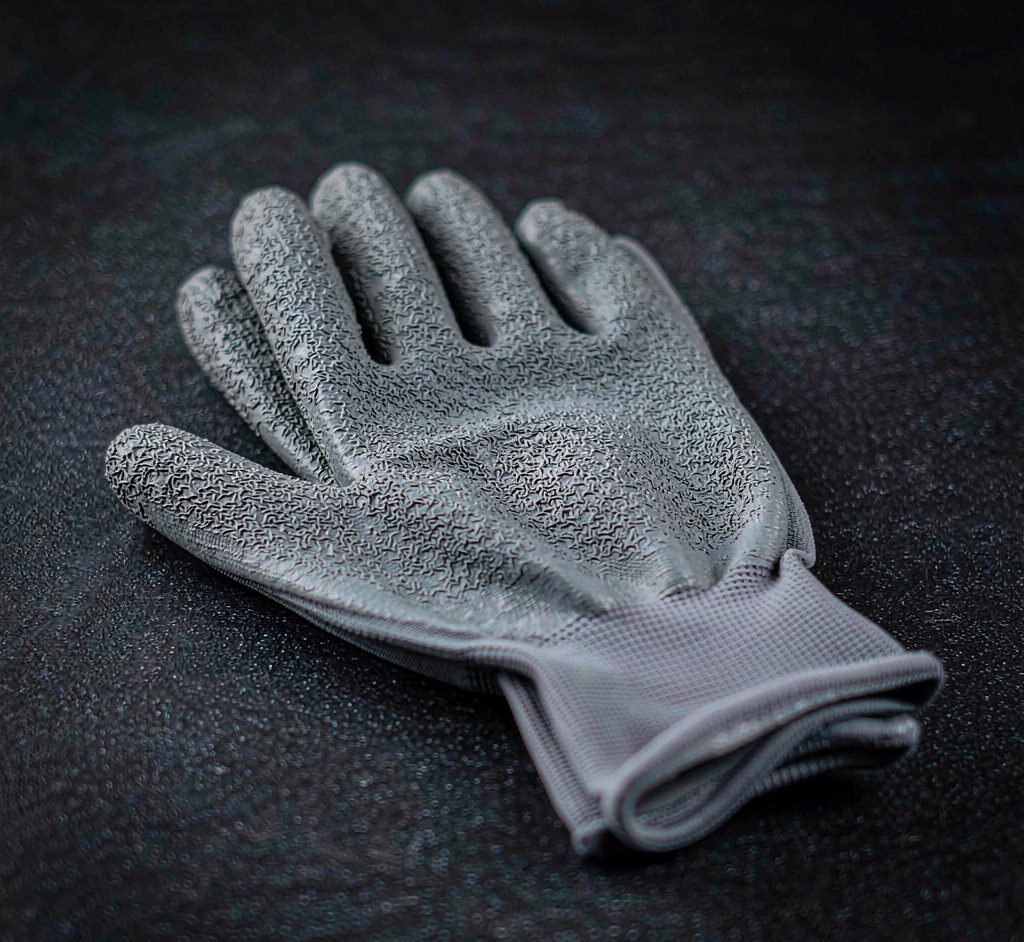
The coating decides how a glove performs: grip on wet or oily parts, resistance to abrasion, or cut protection for sharp material. We supply the full spread and can mix styles within one order.
| Style | Coating / liner | Typical use | Marking |
|---|---|---|---|
| PU palm-dipped | Polyurethane on 13-gauge knit | Assembly, electronics, general handling | 3121 |
| Sandy nitrile | Foam nitrile, sandy finish | Oily and wet components, construction | 4121 |
| Crinkle latex | Natural latex, crinkle grip | Masonry, rough handling, cold work | 2242 |
| Cut-resistant | PU or nitrile on HPPE liner | Glass, sheet metal, blades | 4X43D |
| Leather rigger | Cowhide / split leather | Heavy handling, welding support | 3143 |
Markings shown are typical configurations. Performance levels are confirmed by test report for the specific style, liner weight and coating you order.
Beyond general handling: gloves engineered for a specific hazard — sharp edges, hot surfaces, chemicals, live circuits or freezing stores. Mixed pallets of several specialist styles ship together with the rest of your order.
| Hazard | Construction | Standard | Key levels |
|---|---|---|---|
| Cut — high level | HPPE / glass-fibre knit, PU or nitrile coat | EN 388 + ISO 13997 (TDM) | Cut D–F (2–5 kg blade force) |
| Contact heat | Aramid or heavy split leather, reinforced palm | EN 407 | Contact heat 1–4 (up to 400 °C, level 4) |
| Chemical | Nitrile, butyl, PVC or neoprene; supported or unsupported | EN ISO 374-1 | Type A (18 chemicals) / B / C; permeation level 1–6 |
| Electrical | Natural latex, beaded cuff, class-marked | IEC 60903 | Class 00–2 (500 V – 17 kV working) |
| Cold | Insulated knit with waterproof insert, latex or nitrile coat | EN 511 | Contact cold 1–4, convective cold 1–4, water 1–3 |
| Disposable | Nitrile, latex or vinyl, powder-free | EN ISO 374-5 / EN 455 | AQL 1.5 (food, pharma) / AQL 4.0 (general) |
Electrical-insulating gloves are supplied with individual test certificates; leather protectors (EN 388 over-gloves) can be quoted with them. Chemical gloves are quoted against the specific chemicals you handle — permeation performance depends on the chemical, not the label.
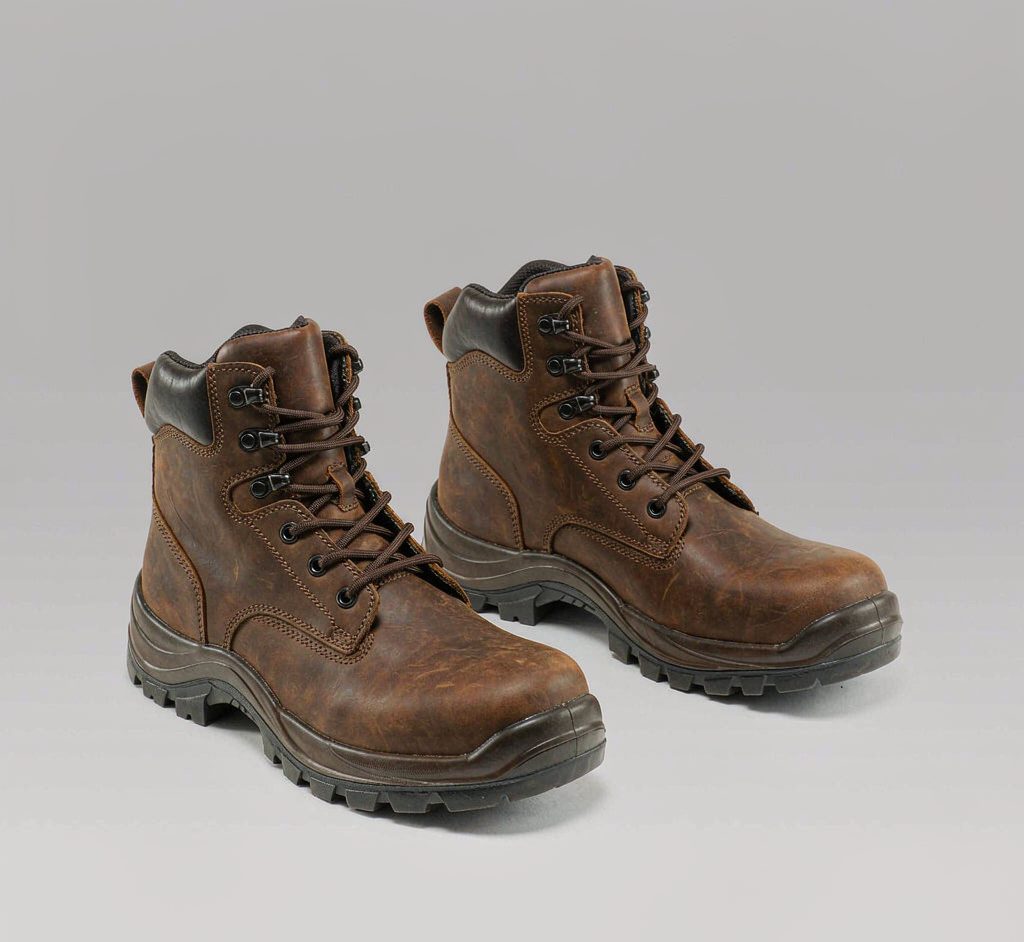
Every style carries a 200-joule toe cap. The class you choose depends on whether the site has puncture risk, standing water or both — S1P and S3 cover most construction and industrial work.
| Class | Adds to the class below | Suited to |
|---|---|---|
| S1 | Closed seat, antistatic, energy-absorbing heel | Light industry, warehousing |
| S1P | Penetration-resistant midsole | Construction, general site work |
| S2 | Water-resistant upper | Outdoor work without puncture risk |
| S3 | Midsole + cleated outsole | Construction, groundwork, heavy industry |
| S5 | All-rubber boot with midsole and cleated sole | Wet, muddy or chemical-exposed sites |
Optional marks available: SR slip resistance · HRO heat-resistant outsole (300 °C) · WR fully waterproof · AN ankle protection · M metatarsal protection.
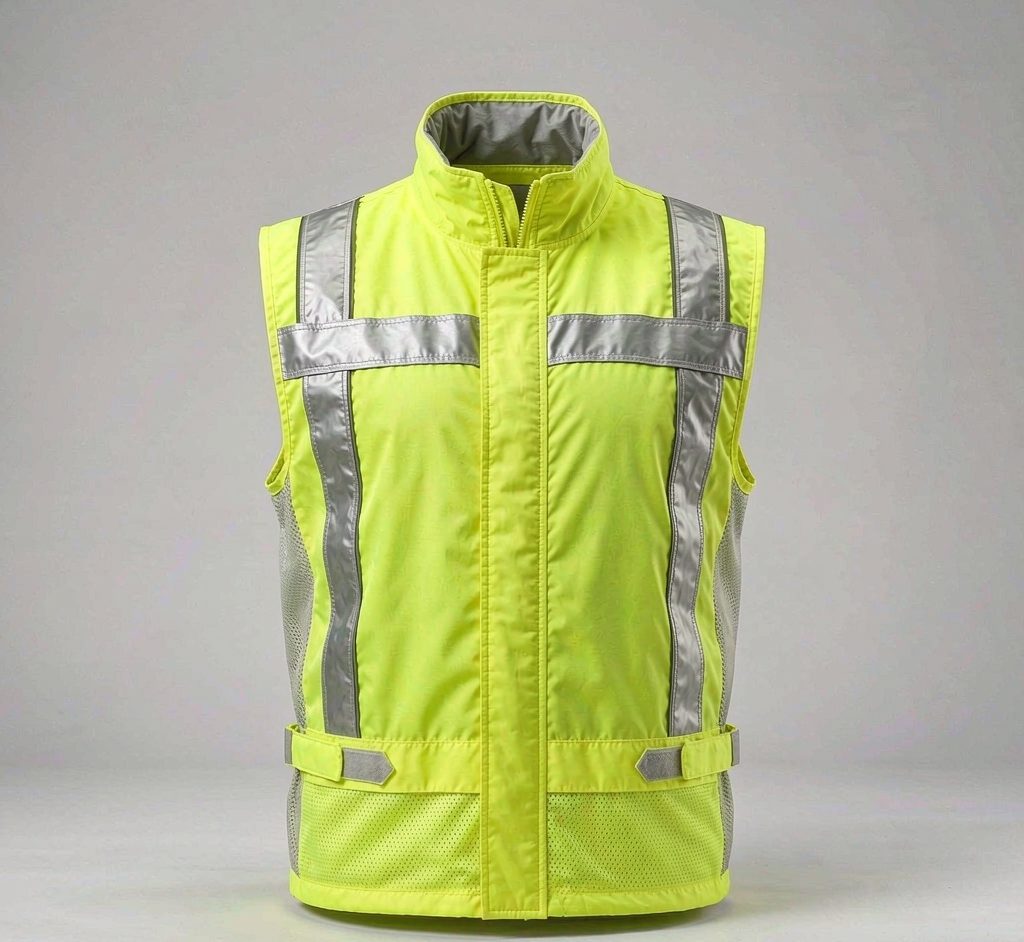
The class is set by how much fluorescent background and retroreflective tape the garment carries — not by how bright it looks. Class 2 covers most sites; Class 3 is required where traffic is fast or separation is absent.
| Class | Background material | Retroreflective tape | Typical use |
|---|---|---|---|
| Class 1 | 0.14 m² | 0.10 m² | Car parks, pedestrian areas, slow traffic |
| Class 2 | 0.50 m² | 0.13 m² | Roads, construction sites, warehousing |
| Class 3 | 0.80 m² | 0.20 m² | Motorways, rail, high-risk environments |
Available as vests, two-tone vests, long-sleeve jackets, parkas, trousers and coveralls. Fluorescent yellow or orange, in knit or woven fabric from 120 to 300 g/m².
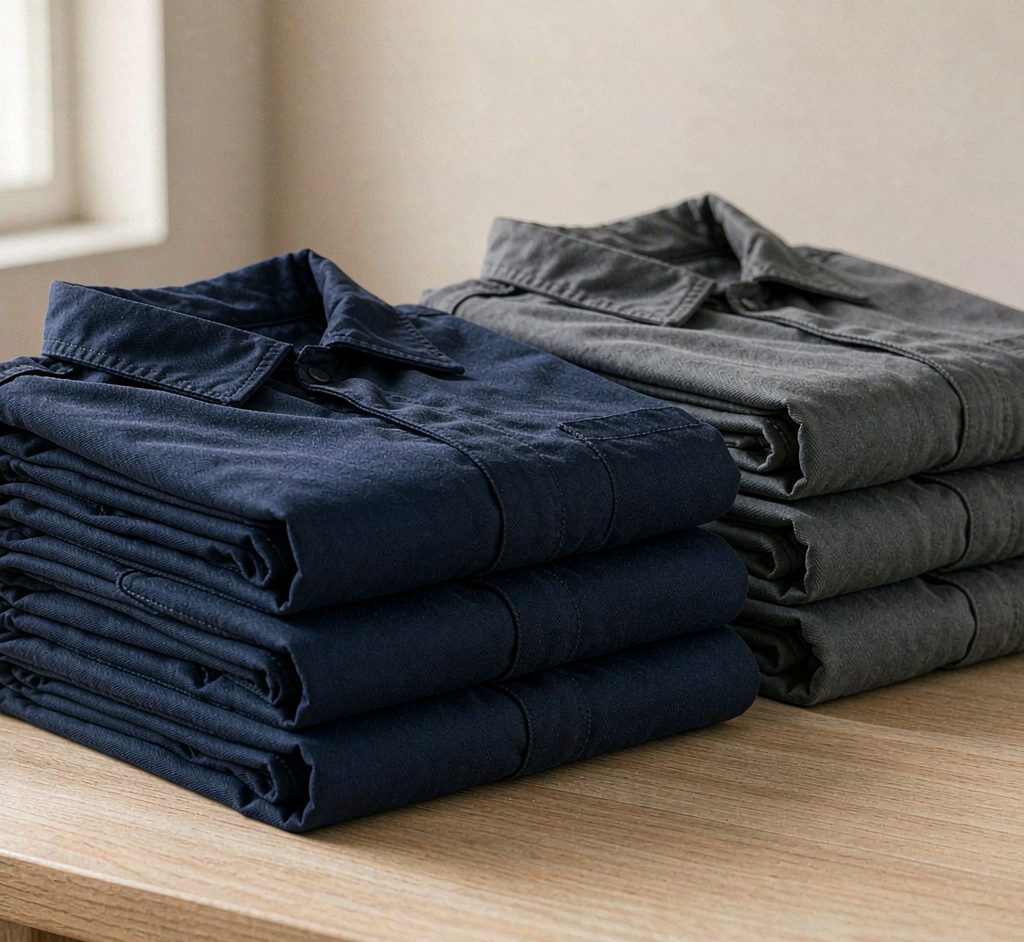
For security firms, hotels, factories and service companies that need a consistent look across a workforce. Made in your colours, with your branding applied at the factory rather than afterwards.
| Item | Fabric | Weight |
|---|---|---|
| Polo shirt | 100% cotton piqué or poly-cotton | 180 – 220 g/m² |
| Work shirt | Poly-cotton twill | 150 – 190 g/m² |
| Work trousers | Poly-cotton twill, reinforced knees | 240 – 280 g/m² |
| Softshell jacket | Bonded polyester, 3-layer | ~320 g/m² |
| Coverall | Poly-cotton, concealed zip | 220 – 260 g/m² |
Colour matching to a Pantone reference is available on repeat orders. Sizes can follow EU, UK, US or your own size chart.
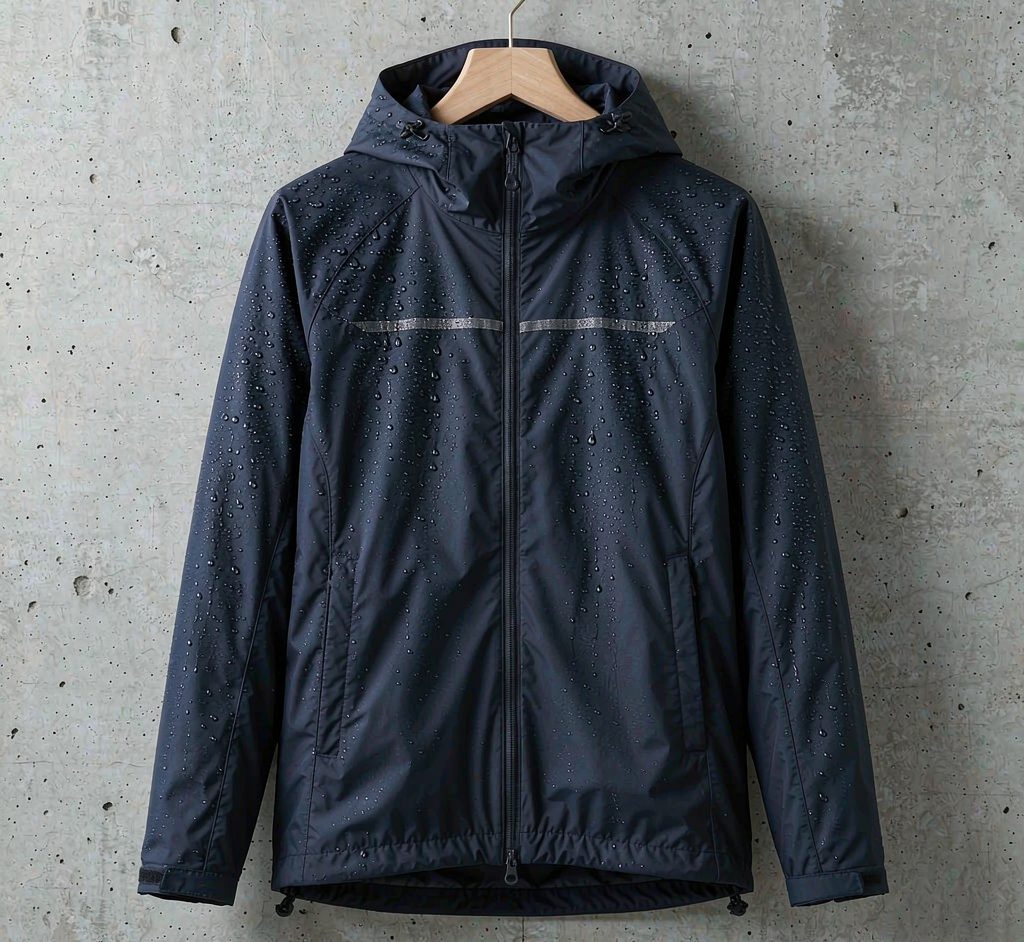
Waterproof and insulated layers that sit over the rest of the kit. Two axes matter here: how much rain the fabric holds out, and how much of your body heat it lets escape.
| Standard | Covers | Graded by |
|---|---|---|
| EN 343 | Rain, fog and ground moisture | Water penetration 1–4 and breathability 1–4 |
| EN 342 | Cold environments below −5 °C | Thermal insulation and air permeability |
| EN 14058 | Cool environments down to −5 °C | Thermal resistance of the garment |
Supplied as PU or PVC-coated jackets and trousers with welded seams, hi-vis rain parkas, fleece and padded liners, and matching thermal gloves.
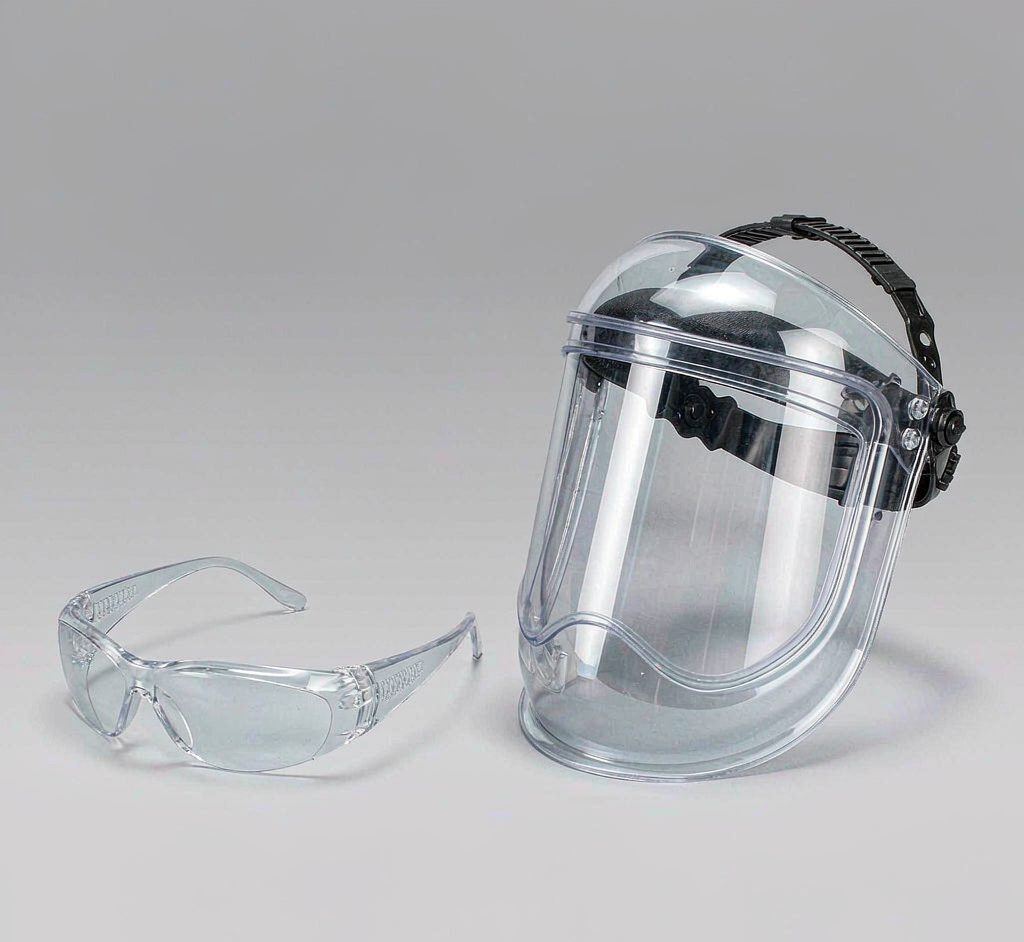
All EN 166 — the optical class (1–3) depends on how often the wearer puts it on and takes it off, and the mechanical rating (F, B, A) on the impact energy the lens must survive. The type of protector follows the hazard: impact, dust, droplets or radiant heat.
| Type | Typical marking | Suited to |
|---|---|---|
| Safety spectacles | EN 166 · 1 F | General impact, machining, inspection |
| Goggles, indirect vent | EN 166 · 3 4 B | Chemical splash, dusty environments |
| Face shield + browguard | EN 166 · 8 B (full face) | Grinding, spraying, molten-metal splash |
| Welding helmet / hand shield | EN 175 + EN 169 shade 9–13 | MMA, MIG, TIG welding and cutting |
| Auto-darkening filter | EN 379 · 1/1/1/2 | Production welding with variable amps |
Coatings: K anti-scratch · N anti-fog · UV filters to EN 170 (2C-1.2) · glare filters to EN 172. Prescription frames and over-spectacle styles available.
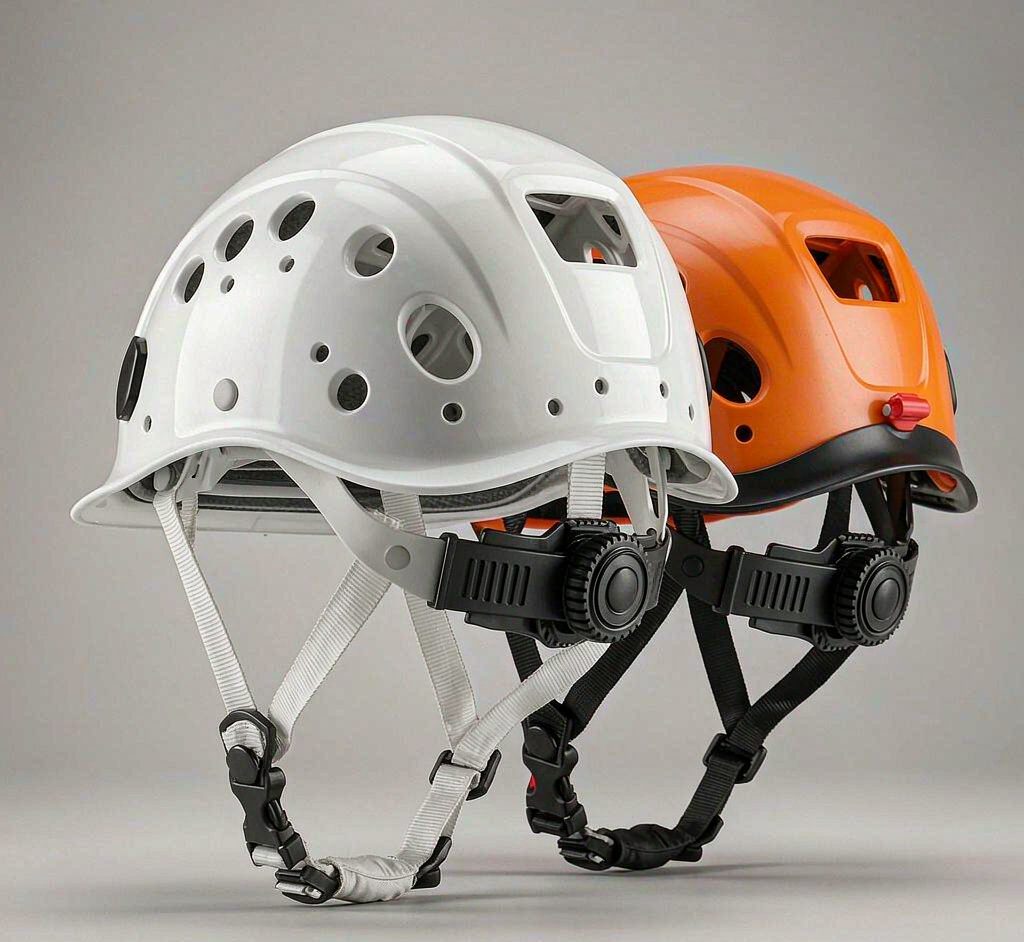
An EN 397 helmet absorbs a 5-kilojoule impact and resists penetration; the options you add decide where it can be used. Harness type, shell material and colour are quoted per project — logo printing on the shell is standard for tenders.
| Type | Standard | Suited to |
|---|---|---|
| Industrial safety helmet | EN 397 (5 kJ impact, penetration) | Construction sites, plants, ports |
| Forestry / climbing helmet | EN 12492 (4-point chin strap) | Tree work, work at height, rescue |
| High-performance helmet | EN 14052 (broader impact coverage) | Steel erection, tunnelling |
| Bump cap | EN 812 (bumps, not falling objects) | Maintenance, packing, vehicles |
| Electrically insulating | EN 50365 class 0 / 00 | Live electrical work up to 1000 V AC |
Optional marks: -30 °C low temperature · 440 V AC electrical insulation · LD lateral deformation · MM molten-metal splash. Accessories: earmuffs, visor carriers, chin straps, winter liners, shell and harness in HDPE or ABS.
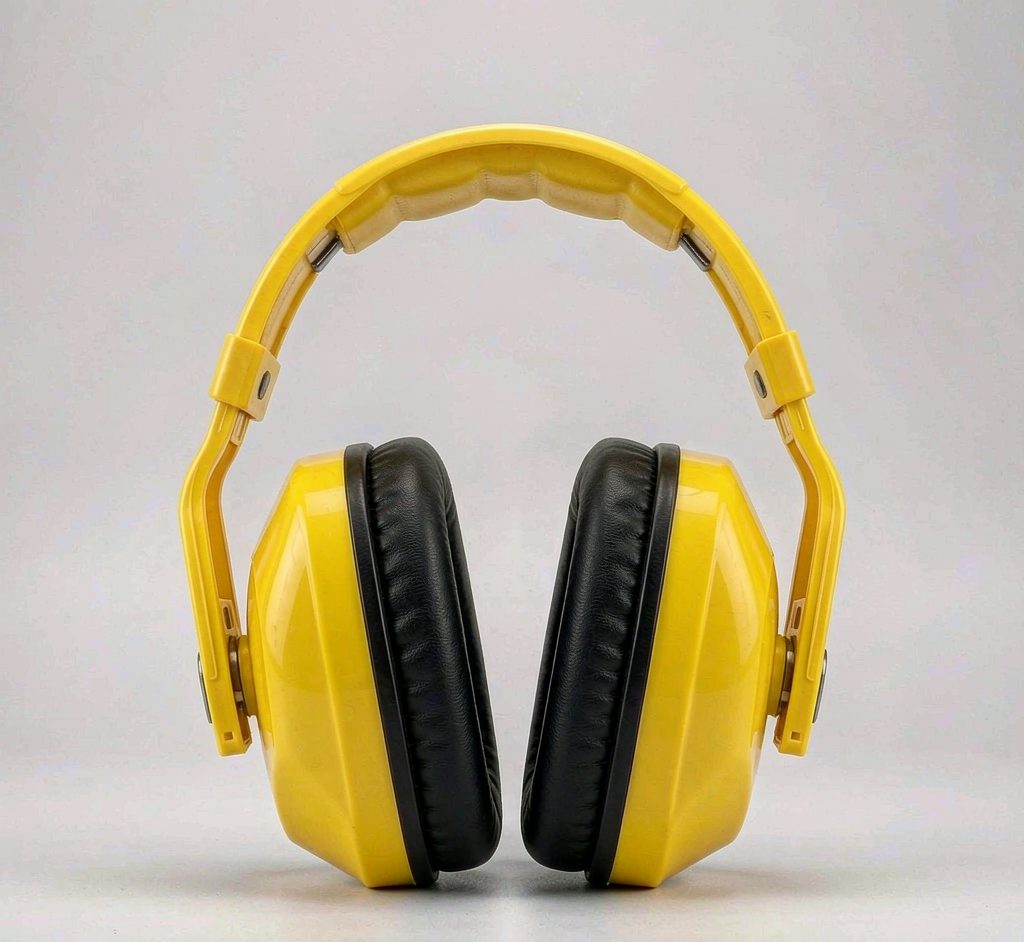
Protection is chosen by attenuation — how many decibels the protector removes at the frequencies of your noise. Overshooting is a real risk: a wearer who cannot hear instructions takes them off. We quote SNR, H, M and L values on every style.
| Type | Standard | Typical SNR |
|---|---|---|
| Disposable foam earplugs | EN 352-2 | 22 – 37 dB |
| Earmuffs, headband | EN 352-1 | 24 – 34 dB |
| Earmuffs, helmet-mounted | EN 352-3 | 23 – 31 dB |
| Level-dependent muffs | EN 352-4 | Ambient listening + impulse protection |
| Banded earplugs | EN 352-5 / -6 | 20 – 28 dB, rest-around-neck |
For helmet-mounted cups we match the helmet model and confirm the combined EN 397 + EN 352-3 marking. Custom-printed earplugs in branded dispensers are available for site distribution.
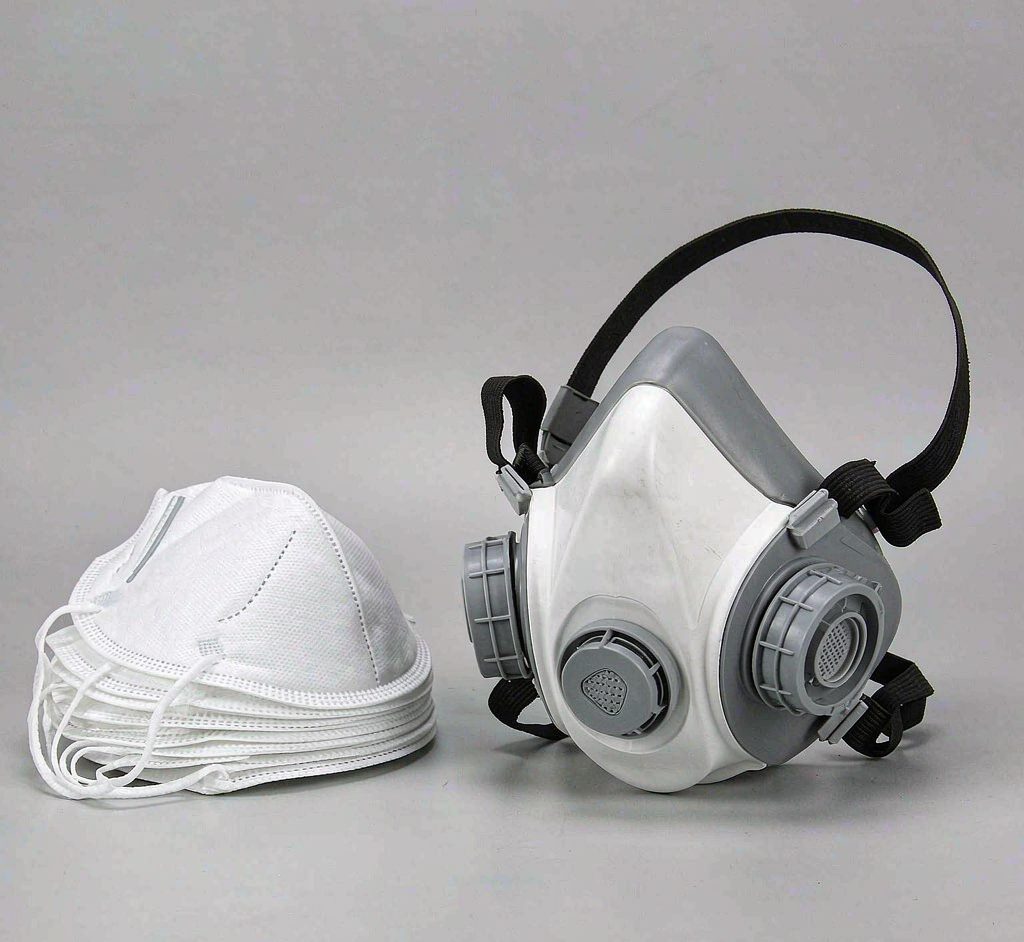
Disposable FFP masks cover dust and mist; reusable half and full-face masks with combined ABEK filters cover gases and vapours. The filter class follows the contaminant and its concentration — send us the safety data sheet and we will quote the right level.
| Type | Standard | Protection level |
|---|---|---|
| Disposable FFP masks | EN 149 : 2001 + A1 | FFP1 ~80% · FFP2 ~94% · FFP3 ~99% (with/without valve) |
| Reusable half mask | EN 140 + EN 143 filters | P1/P2/P3 particulate; gas with EN 14387 ABEK |
| Full-face mask | EN 136 class 1 / 2 / 3 | Higher protection factors, eye coverage |
| Powered / supplied air | EN 12941 / 12942 | Confined space, high-concentration work |
Spare filters, pre-filters and hygiene kits quoted with every reusable mask. FFP masks available in white, grey or hi-vis shell colours with your logo on the shell.
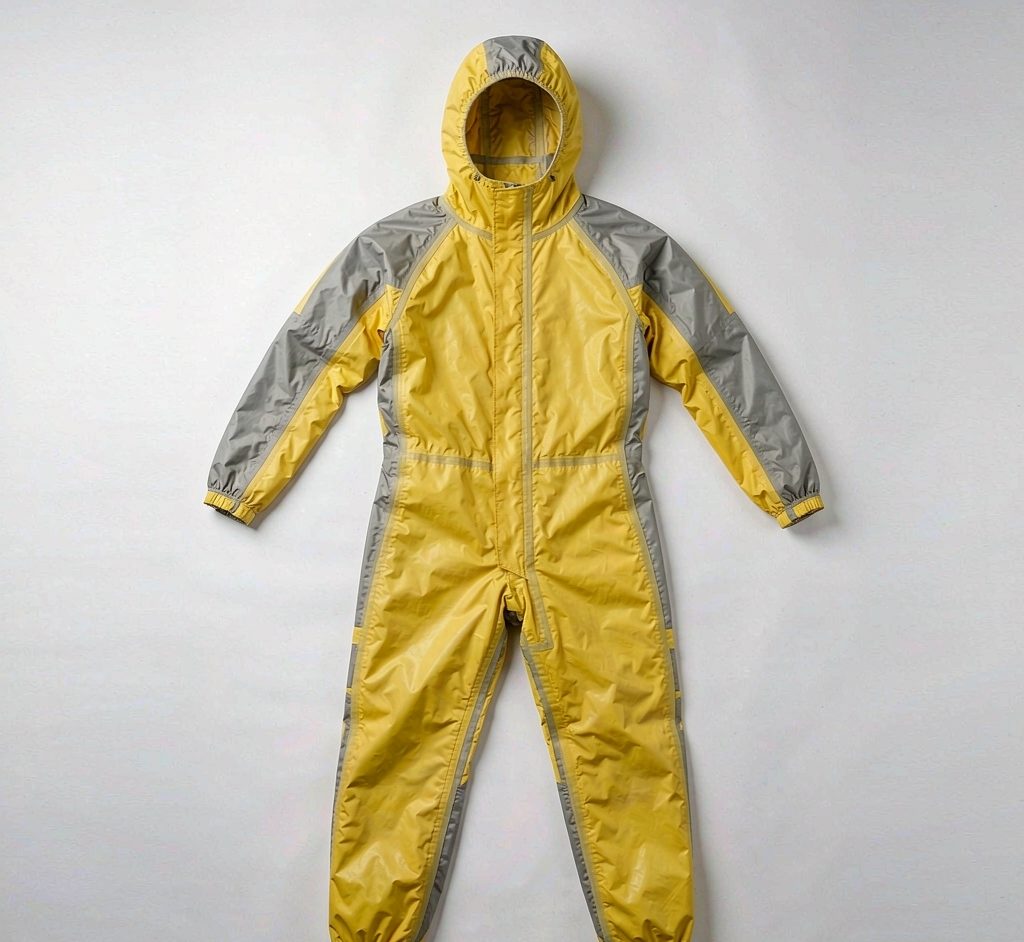
The "Type" number is the whole story: it states what form of chemical attack the garment was tested against — from a light splash to a gas-tight enclosure. Disposable Type 5/6 coveralls dominate routine work; re-usable Type 3/4 suits are quoted per chemical.
| Type | Standard | Hazard / garment |
|---|---|---|
| Type 6 | EN 13034 | Light chemical splash — disposable coveralls |
| Type 5 | EN 13982-1 | Solid particulates, asbestos, powders — hooded coveralls |
| Type 4 | EN 14605 | Liquid spray saturation — taped or bound seams |
| Type 3 | EN 14605 | Liquid jet pressure — taped seams, attached socks/gloves |
| Type 1a/1b/1c | EN 943-1 / -2 | Gas-tight suits for emergency response |
Paired chemical gloves to EN ISO 374-1 (Type A/B/C, permeation levels 1–6) and boots/overshoes complete the ensemble. Anti-static treatment to EN 1149-5 available on disposable fabrics.
Flame resistance lives in the fibre — treated cotton, aramid or modacrylic blends — and is confirmed by the standard's letter codes. We supply fabric mills with ISO 11612 and arc-flash certificates, and garments made to your style in those certified fabrics.
| Standard | Covers | Key metric |
|---|---|---|
| EN ISO 11612 | Heat & flame for industry | A1/A2 flame spread; B convective, C radiant, D/E molten metal, F contact heat |
| EN ISO 11611 | Welding & allied processes | Class 1 (light) / Class 2 (heavy, restricted spaces) |
| EN ISO 14116 | Limited flame spread | Index 1–3; index 3 required for EN ISO 11612 base |
| IEC 61482-1-1 / -1-2 | Electric arc | Open-arc ATPV in cal/cm²; box test class 1 (4 kA) / 2 (7 kA) |
| EN 1149-5 | Antistatic requirement | Combined with flame standards on petrochemical sites |
Range: welding jackets, bib-and-brace, sleeves and aprons; FR coveralls and shirts in 240–320 g/m²; winter-lined FR parkas for outdoor energy work. Leather welding accessories (gauntlets to EN 12477 type A/B) quoted with the garments.
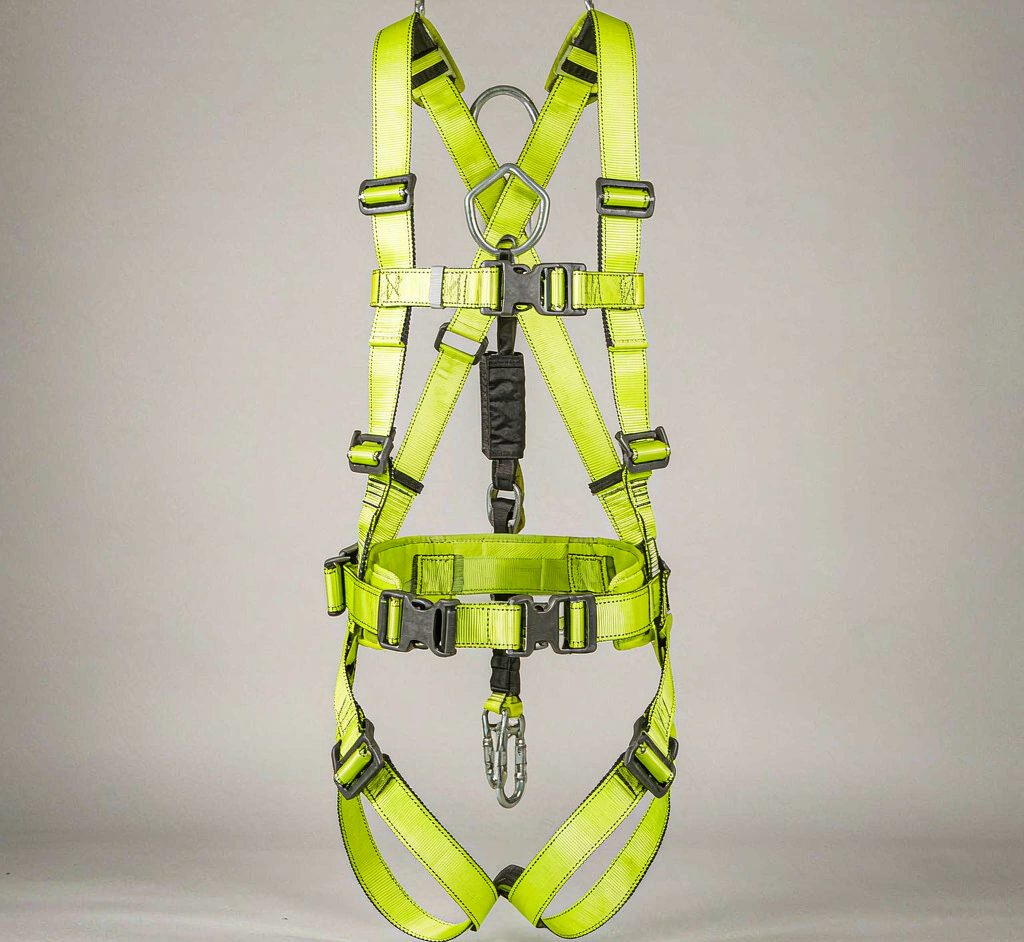
A fall-arrest system is a set of components, each certified on its own standard and matched to the anchorage and clearance above the ground below. We supply the complete kit — harness, absorber, connector and anchor — as one inspected, documented set.
| Component | Standard | Function |
|---|---|---|
| Full-body harness | EN 361 | Two-point (front + dorsal) arrest attachment |
| Energy absorber + lanyard | EN 355 | Limits arrest force to 6 kN |
| Connectors & hooks | EN 362 | Carabiners, scaffold hooks, rope grabs |
| Retractable lifelines (SRL) | EN 360 | Auto-bringing line, shorter fall distance |
| Work positioning belt & lanyard | EN 358 | Hands-free positioning on poles and steel |
| Anchor devices | EN 795 | Fixed, transportable and horizontal-line anchors |
Webbing colour, branding and kit configuration quoted per project. Rope-access harnesses to EN 813 / EN 12841 and rescue kits available for confined-space programmes.
Yongnian in Hebei is China's largest fastener production base, and the factories we buy from there work to EN, ASTM and ISO specifications. Quoted as matched assemblies — bolt, nut and washer — so the joint meets the class it was designed to.
| Group | Typical items | Standard |
|---|---|---|
| Structural bolting | Bolt, nut and washer assemblies | EN 15048-1 · ASTM F3125 (A325 / A490) |
| Hexagon bolts | M5 – M64, part or fully threaded | ISO 4014 / 4017 · DIN 931 / 933 |
| Nuts & washers | Hex nuts, plain, spring and square washers | ISO 4032 · DIN 934 / 125 / 127 |
| Studs & rods | Metre rods and cut-length flange studs | DIN 975 / 976 · ASTM A193 B7 / A194 2H |
| Anchor bolts | J-bolt, L-bolt, wedge and chemical anchors | Made to drawing · ETA anchors |
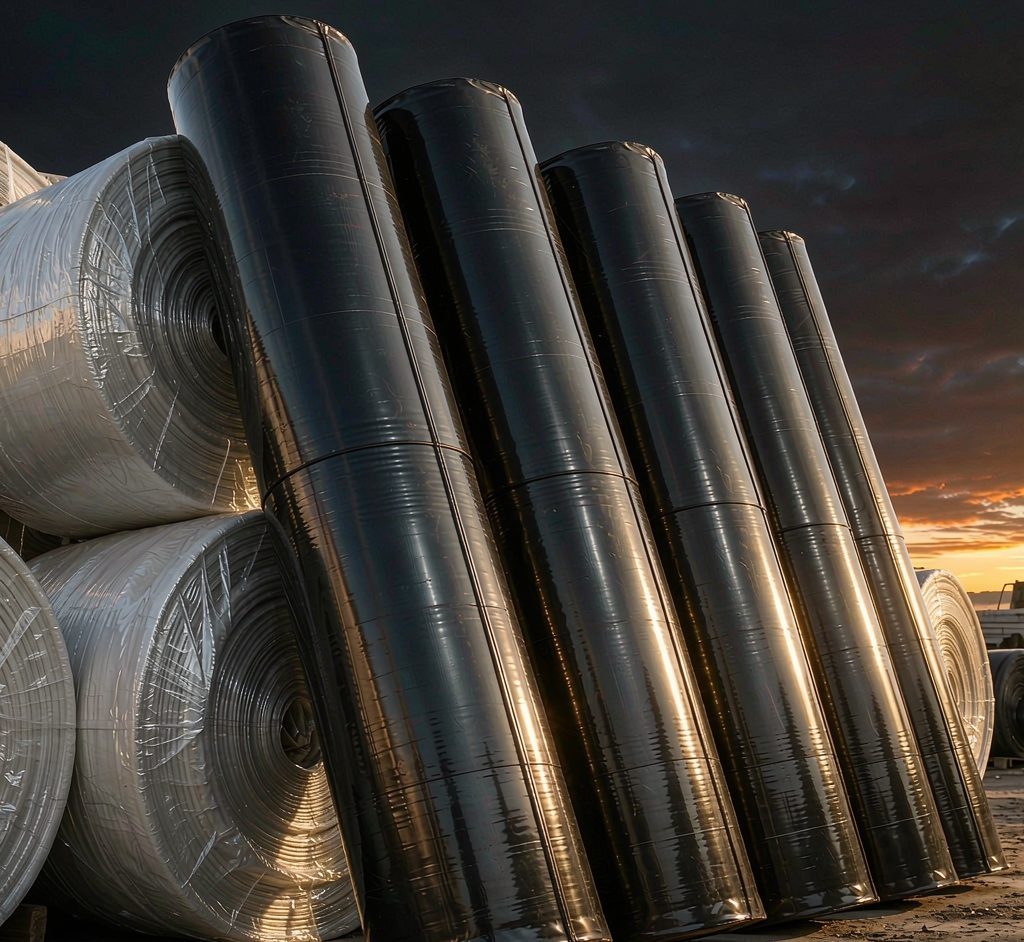
Separation, reinforcement, filtration, drainage and containment — bought on the test that governs them, not on appearance. Geotextiles run to 6 m wide and geomembranes to 8 m, which cuts the number of laps a contractor has to weld on site.
| Group | Typical range | Key test |
|---|---|---|
| Woven geotextile | 20 – 400 kN/m, PP and PET | ISO 10319 |
| Nonwoven geotextile | 100 – 1200 g/m² | ISO 10319 · ISO 11058 |
| HDPE geomembrane | 0.3 – 3.0 mm, smooth or textured | GRI-GM13 · ASTM D6693 / D5885 |
| Geogrid | 20 – 300 kN/m, biaxial and uniaxial | ASTM D6637 |
| Geocell & drainage | Cells, drainage nets and boards | Seam and flow tests |
| GCL & erosion control | Bentonite liners, coir mats, geobags | ASTM D5887 |
Send the hazard, the standard and the destination — we will tell you what is available and what it costs.