North China Source · Wine Labels & Packaging for European Wineries [email protected]  |  Tel / WeChat +86 159 0229 1668
NCS North China SourceWine Labels · Packaging
Home  /  Compliance
Compliance & documents

Documents, not adjectives

A wine label sits in indirect food contact, and a European buyer is entitled to ask what that means in paper. This page sets out the documents we prepare and supply with an order — and, just as usefully, the certificates that are not required.

The file that ships with the goods

What you receive with every order

Documentation is prepared per order against the actual materials used — not a generic certificate kept on a shelf. Where a material changes, the file is refreshed before the new stock is printed.

  • Declaration of Conformity to Regulation (EC) 1935/2004, citing the BfR XXXVI recommendation for paper and board.
  • Third-party migration test reports on the actual facestock and board — issued by accredited laboratories.
  • GMP statement to Regulation (EU) 2023/2006 covering printing, varnishing and converting.
  • Ink and adhesive declarations referencing EuPIA guidance and the Swiss ink ordinance (SR 817.023.21) — including whether the ink system is low-migration.
  • REACH SVHC declaration — confirming no candidate-list substance above 0.1 % w/w in the finished article.
  • Sensory (taint) assessment on the printed stock — an odour check, because a label that smells of anything is a fault in a wine cellar.
  • Animal-derived component statement — for estates that need a vegan-suitable label, since casein and similar binders still appear in some coatings.
  • Recycled-fibre declaration where recycled stock is chosen — recycled fibre carries its own migration risk and its own documentation duty.
  • FSC chain-of-custody documentation where certified label stock or board is used.
  • PPWR documentation for cartons and boxes — recyclability assessment and substance compliance under (EU) 2025/40.
  • Commercial documents — packing list, certificate of origin, and inspection record with photographs taken before loading.

A quality control bench with a printed label sheet, calliper and colour measurement device
Migration testing

What the laboratory actually measures

Paper is not tested like plastic — it cannot withstand aqueous food simulants without disintegrating. Under BfR XXXVI, paper and board are tested using modified methods: Tenax (MPPO) as a dry simulant, or extraction testing. The parameters below are the ones a European importer is most likely to ask about.

ParameterLimit / expectation
Lead (Pb)≤ 10 μg/l
Cadmium (Cd)≤ 5 μg/l
Aluminium (Al)≤ 1 mg/kg
Bisphenol A (BPA)≤ 0.01 mg/kg — tightened in the current BfR XXXVI edition
Bisphenol S (BPS)≤ 0.05 mg/kg — the substitute now under scrutiny as BPA is restricted
AcrylamideNot detectable — a recent addition to the recommendation
ParameterLimit / expectation
Benzophenone≤ 0.6 mg/kg — primarily an ink and varnish concern
PhotoinitiatorsUV-cured systems screened for migration; low-migration inks preferred
PhthalatesBounded by the DEHP-equivalent convention
Primary aromatic aminesNot detectable at relevant levels
Mineral oil (MOSH / MOAH)Screened; MOAH carried as a footnote expectation in the current edition
FormaldehydeScreened against the recommendation's limit
Why the report must be recent. BfR XXXVI was revised with effect from October 2026 — the BPA limit tightened from 0.05 to 0.01 mg/kg and acrylamide added as not detectable. A migration report issued against the previous edition no longer demonstrates compliance. We check the edition before accepting any report into the file, including our own suppliers'.
The 2026 rules

Two regulations that changed this year

Both are recent enough that many suppliers have not updated their paperwork. If your current supplier has never mentioned either, that is worth a question.

PPWR — Regulation (EU) 2025/40

Applies in full since 12 August 2026

The Packaging and Packaging Waste Regulation now governs food-contact packaging placed on the EU market. For cartons and boxes this means: substance limits including PFAS thresholds (single substance < 25 ppb, targeted sum < 250 ppb, total fluorine < 50 ppm); heavy metals — lead, cadmium, mercury and hexavalent chromium — at ≤ 100 mg/kg in total; design for recyclability; and a documentation duty — an EU Declaration of Conformity with a technical file retained for five years. Producers outside the EU work with an authorised representative in the Union; we coordinate this with the customer as part of the order.

REACH Annex XVII — entry 79, (EU) 2024/2462

PFHxA restriction, effective 10 October 2026

The restriction on PFHxA and its salts (below 25 ppb, with related substances below 1,000 ppb, measured on the homogeneous material) took effect in October 2026. It applies in parallel to the PPWR rather than replacing it — a single sample set is screened against both. Where a finish or grease-barrier treatment is involved, this is the test that decides it.

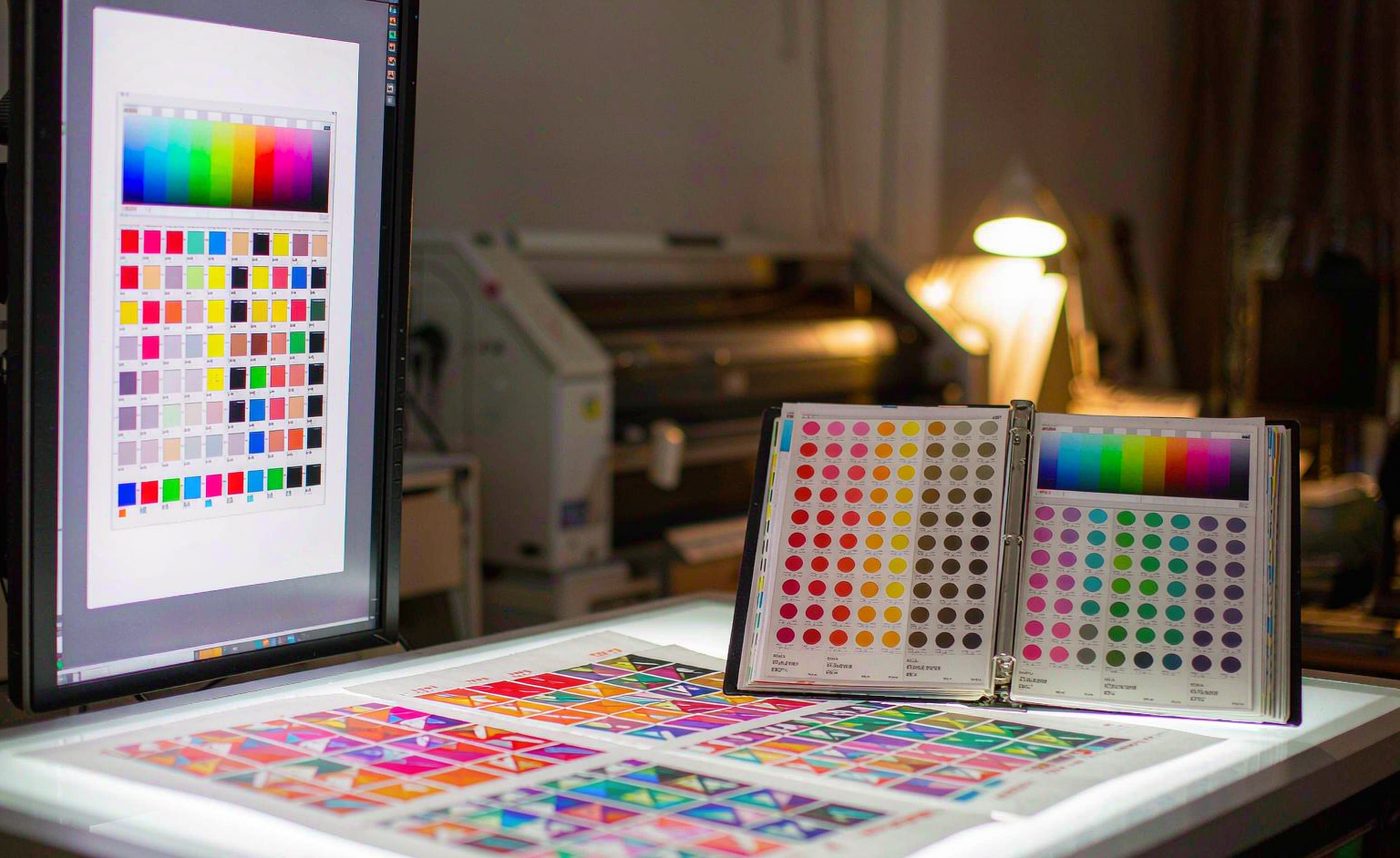
A prepress workstation with a proof sheet on a light table beside a colour fan deck
Qualifying the press

The file we ask of a workshop before it prints for us

A compliance dossier is only as good as the workshop behind it. Before a press joins our order book it is asked for its own documents, and the answer decides whether it gets the work:

  • business licence and printing permits;
  • ISO 9001 — and BRCGS Packaging Materials where a customer's own supplier audit calls for it;
  • an FSC chain-of-custody certificate, with the number recorded in our files;
  • a Declaration of Conformity citing BfR XXXVI for the stocks it offers — not a generic "food grade" letter;
  • third-party migration reports issued against the current edition of the recommendation;
  • ink and adhesive declarations, stating whether the systems are low-migration;
  • its PFAS and PFHxA test position — actual reports, or a laboratory route to obtain them;
  • a statement on animal-derived components, for estates that need a vegan-suitable label.

Where a workshop holds most of the file and has a credible route to the rest, we work with it and arrange the outstanding testing. Where it cannot, it does not print for our customers — whatever its price.

Division of labour

What we need from you — and what we do not

Compliance on a wine label is a shared job: the wine's legal content is yours, the material's fitness is ours, and the pre-printed marks are a printing task — not a certification one.

  • Artwork files — we pre-print certification marks, the organic leaf, barcodes and the importer line exactly as supplied in your artwork.
  • Target market(s) — Germany, France, the Nordics and the UK each carry small differences in language and legal text layout.
  • Your e-label data carrier, where the wine falls under the EU rules on ingredients and nutrition — we print the QR to the contrast and module tolerance that keeps it readable in cellar light, not only on a proof.
  • Bottle dimensions for cartons — so the dividers are cut to the bottle, not to an average.

The organic certification itself belongs to the estate — we print the mark from your artwork; we do not certify. The same applies to appellation and vineyard designations.

What is not required — and we will not sell you

CE marking

Labels and cartons are not products within the scope of CE marking. Any supplier offering "CE certification" for a wine label is selling paper with a logo on it.

FDA compliance

A US regulation, relevant only for the American market. For EU-bound goods it is not the applicable framework and costs money nobody needs to spend.

Organic certification of the printer

The organic mark belongs to the certified estate. What the printer needs is the ability to reproduce the mark faithfully — which is a printing question, not an agricultural one.

EUDR due diligence

Printed paper products were moved out of the scope of the deforestation regulation by its 2025 amendment, and China is classified a low-risk country of origin. Not applicable here.

Ask for the document set with your quotation

We will send the DoC template and a sample migration report alongside the price — before you commit to anything.

Request a quote